Some things we take for granted. Take education: many of us kids wish and dream for snow days, or extra p.a. days so that we don't have to go to school. Education in Ontario is a guarantee with educational opportunities available free of charge to all kids living in the province up until high-school graduation. Courses are offered at various levels from basic to advanced and gifted depending upon the student's goals: the workforce, college or university. Although we don't often appreciate the homework that comes with school, it's school that opens the door to the future.
For me, the system is broken. I am one of those kids stuck in a limbo between being too sick to attend school with any sort of regularity, but not sick enough to be admitted to the hospital and entered into their hospital-based school. I attempted to get back to attending highschool this year; it was an epic failure that resulted in being hospitalized for almost 2 months and developing intestinal failure as a result of contracting a simple bug. You see, I take immuno-suppressants to combat my Crohn's Disease. This means that any little thing that comes along, I tend to catch it and it tends to develop into something nasty like pneumonia. Preventing this is not as simple as "wash your hands", which does help, but in a school of thousands, when there is a viral outbreak, there is often no real escape.
As a result of developing the pneumonia and intestinal failure this past year, I was unable to complete the two credits I was working towards. Even though I had 90% in grade 9 gifted science, I lost the credit. It was both devastating and angering. I had put so much work and energy into keeping up, and ended up with nothing to show for it. This caused me to really sit down and think about my options.
To be realistic, I am not going to get much better. I have refractory Crohn's Disease, which is a fancy way of saying "nothing works". In 6 years, I haven't had one single period of remission. My current treatment has helped, but it hasn't been the complete answer to put me into remission. I have run out of available treatment options, so now we're on to symptom management. I will likely always have some degree of immune suppression due to my auto-immune illnesses. So in being realistic, I have to look at the past history when I am trying to plan for what might work for my future. And attending a regular highschool doesn't seem to work well for me. I don't want to keep putting in massive amounts of work only to lose it all because I contracted some simple bug. There had to be another solution.
The only other education option available free of charge to me is through the Student Alternative Learning Program. The only courses available however are at a basic learning level. I went from being at the top of my class in the competitive gifted program to doing basic level work. Everyone keeps telling me how "lucky" I am that I get easier work, that I should be able to just fly through it. For me, it is anything but easy. The only way that I can describe the work I am being given is mind-numbingly boring, and even that doesn't quite get at the real feeling.
When I was in grade 1, I refused to do work. Once we initially learned how to do something, I wanted to move on, I didn't feel the need to practice something that came as natural to me as breathing. So I would sit there and cause problems. My mom was encouraged to send me for psycho-educational testing which revealed that I was highly gifted in my analytic and reasoning skills, and my abstract thinking was off the charts. I was also diagnosed with ADHD and dyslexia. Unfortunately, educational options for children who learn similarly to me, didn't start until grade 4. By then I was too sick for school most of the time, but still being given gifted level material to work on.
And then we have this work. Just to give you an example: I learned how to do a bar graph in kindergarten when we all chose our favourite ice cream flavour and we would chart out the numbers. In my grade 9 work, it described to us step-by-painful-step exactly what we needed to do. It felt condescending. It brought tears to my eyes to have gone from work that was much more demanding to this. The work is also full of spelling errors and outdated information, but that's so low on the list of priorities that need to be changed.
I understand that the system isn't designed for kids like me, and that kids like me are unique and don't come along each day. But we are out there. I also understand that they need to make sure that they have resources available for kids who don't learn concepts as easily, so they have to be able to cover most of the population regardless of ability. Yet to have NO options available that would allow us to get to university without being forced to seek education elsewhere? That just doesn't seem right to me.
I sincerely hope that this can change. This needs to change. We all deserve the opportunity to fulfill our dreams, regardless of our state of health. Yet we can only get there if there are programs in place to allow us to successfully get there. Only when the opportunities and supports are there can education truly be available for us all.
Wednesday, April 25, 2018

Thursday, March 29, 2018
UPopolis - Social Media for Sick Kids
Can you imagine being a child and living with chronic health problems? How many areas of your daily life do you think are effected? What are some of the biggest challenges you see for kids like me?
I've been living with severe, refractory Crohn's Disease for almost 6 years now, having been diagnosed when I was 8. That first year alone following my diagnosis, I missed just under 80 days at a brand new school due to repeat hospitalizations, complications, and surgeries. As my classmates were all making new friends, it was a real challenge when I wasn't there to have that opportunity. Being "different" from all of my classmates, and the majority of the school I'm sure, only made that feeling of being alone, stronger.
Enter UPopolis. Oh you've never heard of this program? Let me tell you about it! UPopolis is a safe social media site targeted to pre-teens and teens in the health community. Patients are encouraged to create their own page, and then start connecting to others. In addition to the patient pages, patients can play games, and have the opportunity to learn more about health conditions through the health-specific pages. It's a place for building knowledge and support, which is something we all need in order to be able to successfully cope with our illness.
UPopolis to me is important because it's a way to connect. Due to my health, I haven't been able to build a lot of friendships in my home area. As I can no longer go to school, there are even fewer social opportunities. When I first started out at the hospital, I would meet different patients at the common areas, like the play lounges, but we often parted ways after a few days and would only randomly run into each other again. UPopolis gives us that ability to maintain the friendships that we do make while we are in-patients.
Sometimes, the severity of our disease or the type of disease we have, can make us feel pretty alone. For example, when I had my "permanent" feeding tube (GTube) put in, I broke out in a widespread rash that we eventually learned was an allergy to silicone. Silicone reactions are so rare that they're virtually unheard of, yet when I touch anything silicone, I blister. Not a lot of my more healthy friends would be able to understand the experience. Yet in the health community, even if someone hasn't experienced the same situation, they can understand the experience. UPopolis is a great way to be able to share our experiences with people who really do "get it".
I've been living with severe, refractory Crohn's Disease for almost 6 years now, having been diagnosed when I was 8. That first year alone following my diagnosis, I missed just under 80 days at a brand new school due to repeat hospitalizations, complications, and surgeries. As my classmates were all making new friends, it was a real challenge when I wasn't there to have that opportunity. Being "different" from all of my classmates, and the majority of the school I'm sure, only made that feeling of being alone, stronger.
Enter UPopolis. Oh you've never heard of this program? Let me tell you about it! UPopolis is a safe social media site targeted to pre-teens and teens in the health community. Patients are encouraged to create their own page, and then start connecting to others. In addition to the patient pages, patients can play games, and have the opportunity to learn more about health conditions through the health-specific pages. It's a place for building knowledge and support, which is something we all need in order to be able to successfully cope with our illness.
UPopolis to me is important because it's a way to connect. Due to my health, I haven't been able to build a lot of friendships in my home area. As I can no longer go to school, there are even fewer social opportunities. When I first started out at the hospital, I would meet different patients at the common areas, like the play lounges, but we often parted ways after a few days and would only randomly run into each other again. UPopolis gives us that ability to maintain the friendships that we do make while we are in-patients.
Sometimes, the severity of our disease or the type of disease we have, can make us feel pretty alone. For example, when I had my "permanent" feeding tube (GTube) put in, I broke out in a widespread rash that we eventually learned was an allergy to silicone. Silicone reactions are so rare that they're virtually unheard of, yet when I touch anything silicone, I blister. Not a lot of my more healthy friends would be able to understand the experience. Yet in the health community, even if someone hasn't experienced the same situation, they can understand the experience. UPopolis is a great way to be able to share our experiences with people who really do "get it".
UPopolis is a great way to gain knowledge. The first step to coping with any disease is knowledge. When you don't understand what is going on with your body, what the different treatments might be like, etc., it can seem scary and overwhelming. Learning about the condition helps to take those fears away. It also allows you to build a partnership between you and your health team, so that you can actively participate in your healthcare planning. There is so much information on different conditions on UPopolis making it a great place to start to learn more.
Last fall I was asked to be a UPal, a type of mentor for other patients in the UPopolis community. It's such an honor to be asked to be in this role. To have the potential to help someone else who is struggling, is a huge SUPER-POWER! I've had so many health experiences, being involved with so many different specialties at the hospital, that I can now share with others to help them through similar situations. I have the ability to make a difference, and in doing just that, it helps me to feel better. It reminds me that despite my current limitations, I can still change this world of ours for the better.
Monday, March 26, 2018
Opportunity Knocked, Or Tweeted, and I Answered: My Patient 2 Patient Education Project Experience
Opportunities. Every day we are faced with opportunities; the opportunity for change, to learn, to help make a difference in this world, to make choices. Even just waking up is an opportunity in that you get the chance to do another day. Late last fall, I was given a major opportunity to represent the child-adolescent patient voice at an IBD (Inflammatory Bowel Disease) conference called "Patient 2 Patient Education Project", or P2PEP, for when that name sounds way long! Of course, I immediately grabbed for this amazing opportunity. To be the first pediatric patient that the University of Michigan IBD Program has invited to speak at this event, alongside other well known IBD advocates in the social media world, was a great honor.
Events like P2PEP are so important to our IBD community. These events are a chance for patients to come together to see that they're not alone, that their struggles are often similar to others. Like how my struggles as a 14 year old with Crohn's, can be just as similar to the 60 year old living with the disease. It's an opportunity to look around and see that you truly are not alone on your journey.
P2PEP is a chance to learn from both patients and experienced doctors. No one talks about our disease. It's almost impossible to find what some people call a "socially acceptable time" to discuss our symptoms with our friends, families, strangers in the elevator, etc. Here's how I see that conversation going:
Friend: How's it goin'?
Me: Well last night, I couldn't make it to the toilet and ended up coating the floors with vomit. As if that wasn't enough, my ostomy bag let loose and sent poop everywhere in a massive code brown incident.
Friend: *crickets*
Unfortunately, for a lot of IBD patients, these are common statements. There is no good and acceptable time to talk about what happens with our body functions. Our disease is one of silent suffering when it's not "right" to talk about it. Yet the only way we're going to educate other people, and find a cure for this disease is if we tell our story. If we shout our stories out loud, and keep shouting, awareness will grow. P2PEP gives us an opportunity to come together to give voice to what is important to us as patients, to address the things that might not always get covered in the often-too-quick medical appointments, like partnering with your medical team, how to get the most out of your doctor visits, and more about the other treatments you likely have not heard about.
The great thing about P2PEP is that it's an event for everyone regardless of age. You might not think that's a big thing, but for teens like me, I think we often feel left out of big medical conferences that aren't specific to the pediatric population. The topics discussed are ones that are actually chosen alongside the patients, to hopefully cover what is important to them and what they want to learn. And that means even us pediatric patients. For example, this year I presented with Dr. Neef on the topic of Diet, Growth and Puberty in IBD, and how those things can be particularly challenging for us as patients. Another talk focused on the idea of transitioning from Pediatric to Adult Care, something that sooner or later, us pediatric patients are going to be forced to do. Which is kind of scary when you aren't prepared for it. So P2PEP really does try to touch on it all within a few short, crazy hours, to give a quick "highlights" of what's going on in the IBD world and why this matters to patients.
I had a great time meeting other doctors, fellow health advocates, and patients, it all came to a close way too quickly, like it was just a dream. As exhausting as the day was for me physically, I left feeling inspired by others, and that is always a great feeling to part such awesome company with. It certainly was a dream of an opportunity.
Events like P2PEP are so important to our IBD community. These events are a chance for patients to come together to see that they're not alone, that their struggles are often similar to others. Like how my struggles as a 14 year old with Crohn's, can be just as similar to the 60 year old living with the disease. It's an opportunity to look around and see that you truly are not alone on your journey.
P2PEP is a chance to learn from both patients and experienced doctors. No one talks about our disease. It's almost impossible to find what some people call a "socially acceptable time" to discuss our symptoms with our friends, families, strangers in the elevator, etc. Here's how I see that conversation going:
Friend: How's it goin'?
Me: Well last night, I couldn't make it to the toilet and ended up coating the floors with vomit. As if that wasn't enough, my ostomy bag let loose and sent poop everywhere in a massive code brown incident.
Friend: *crickets*
Unfortunately, for a lot of IBD patients, these are common statements. There is no good and acceptable time to talk about what happens with our body functions. Our disease is one of silent suffering when it's not "right" to talk about it. Yet the only way we're going to educate other people, and find a cure for this disease is if we tell our story. If we shout our stories out loud, and keep shouting, awareness will grow. P2PEP gives us an opportunity to come together to give voice to what is important to us as patients, to address the things that might not always get covered in the often-too-quick medical appointments, like partnering with your medical team, how to get the most out of your doctor visits, and more about the other treatments you likely have not heard about.
The great thing about P2PEP is that it's an event for everyone regardless of age. You might not think that's a big thing, but for teens like me, I think we often feel left out of big medical conferences that aren't specific to the pediatric population. The topics discussed are ones that are actually chosen alongside the patients, to hopefully cover what is important to them and what they want to learn. And that means even us pediatric patients. For example, this year I presented with Dr. Neef on the topic of Diet, Growth and Puberty in IBD, and how those things can be particularly challenging for us as patients. Another talk focused on the idea of transitioning from Pediatric to Adult Care, something that sooner or later, us pediatric patients are going to be forced to do. Which is kind of scary when you aren't prepared for it. So P2PEP really does try to touch on it all within a few short, crazy hours, to give a quick "highlights" of what's going on in the IBD world and why this matters to patients.
I had a great time meeting other doctors, fellow health advocates, and patients, it all came to a close way too quickly, like it was just a dream. As exhausting as the day was for me physically, I left feeling inspired by others, and that is always a great feeling to part such awesome company with. It certainly was a dream of an opportunity.
Wednesday, January 31, 2018
Be Unique, Be You!
As I sat down to write this year's #BellLetsTalk day post, I didn't know what to write. I am fortunate enough that mental health is not one of the demons that I face, although I know that I am at risk of developing problems due to my multiple health battles. But how do I blog about something that I haven't experienced? Do we have any experiences in common from our struggles? So I got to thinking, what does mental health mean to me?

Today I want to talk about differences, as I think that is something I have in common with a lot of people who live with mental illness; the feeling of being different.

I've always been a bit "different". I prefer the word unique. While my peers in Junior Kindergarten were learning their alphabet, I was able to look at my mom's university textbooks and gain some understanding from them. Things like learning my colors didn't interest me when I could explain to the teacher that all color is just different wavelength of pure white, you only had to look at a prism to know this was true. It was hard for me to understand my classmates, as I'm sure it was hard for them to understand me. In grade 1, after refusing to do schoolwork because it felt so mind-numbingly boring, my mom had a psycho-educational evaluation done on me. The psychologist found that I was "Gifted" intellectually - I had a much easier and faster time at grasping ideas and concepts and being able to integrate ideas than my peers. I was bored because the material wasn't challenging and intellectually stimulating for me. The psychologist also found that I have ADHD, although my 'H' comes out through my running thoughts. I've been known to think about random scientific things at 3am. I blame science, it's just too interesting. Last but not least, I was identified as being dyslexic. At least I had actual reasons as to why I felt different than the other kids.
 |
| At Fall Out Boy with my NG Tube |
In grade 4 in Ontario, the official gifted program begins in the public education system. Here was the chance that I would finally be with people who were JUST LIKE ME! It was exciting, something I had been looking for since I was diagnosed in grade 1 and just waiting for this program to come along. The great equalizing moment arrived and then - BAM - I was diagnosed with Crohn's Disease. Again, I was now different on a whole new level. My life consists of doctors, treatment, pain, symptoms and complications. I gained an extreme amount of weight while on steroids and was bullied at school. I had a colectomy and now wear a colostomy bag. I have had an NG (Naso-Gastric) Tube off/on and now have a permanent feeding tube. I am about as different an experience from a "normal" childhood as a person can get. And yet I don't feel that way. I feel that I just grew up in my own unique way, given my own unique situation.
There are others out there suffering, they just suffer in a different way than I do. See, as much as I can talk about my disease and have others understand, there often isn't that understanding for those living with mental health issues. If my disease prevents me from being able to do something, it's understandable, but if it were a mental illness that was preventing me, the response from others would not be the same. And that's why days like today are necessary. There needs to be more LISTENING going on. There needs to be more ACCEPTANCE of the fact that mental illness is every bit as serious as other physical illnesses. There needs to be more HOPE offered to those living with mental illness. And most of all, there needs to be more stories told.
There is power in sharing your story, that much I have learned as my time blogging goes on. Sharing is educating, healing and a great way to reach out to others and connect. If you need help, keep reaching out in every way you can. If you can give help, keep reaching back to others. Together we are stronger, together we will win the war head on.
Tuesday, October 31, 2017
Halloween - Hospital Style!
Happy Halloween. This year I'm doing something different for Halloween. I've been in the hospital for the majority of the past month, having spent a week at home before being readmitted. When I found out that I was likely going to miss Halloween outside of the hospital, it kind of bummed me out.
 Thankfully the hospital thinks of that important part of growing up and tries to make it as normal a day as possible so that kids don't have to completely miss out on marking the holiday.


 Thankfully the hospital thinks of that important part of growing up and tries to make it as normal a day as possible so that kids don't have to completely miss out on marking the holiday.
So how does a large hospital like Sick Kids celebrate Halloween?
Spooktacularly of course!
Thanks to a lot of organizations and companies, Sick Kids transformed from being a place to treat my illnesses to being a Halloween Festival, complete with costumes for the kids, super-heroes and Paw Patrol Dogs, make-up artists and non-food based goodies. It meant so much to be able to go around the hospital from station to station and feel that you haven't completely missed out on what is an important part of growing up for a lot of the kids that come here for treatments. It was great to see all the other kids in their costumes and so excited to participate in something so special.
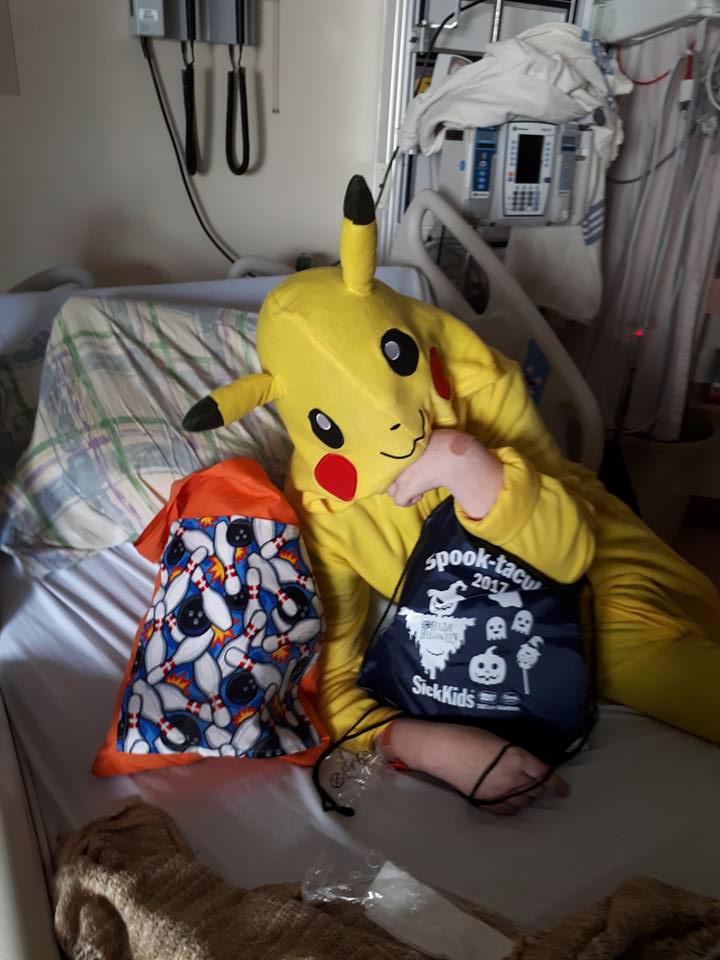
A special shout-out to Yvonne Hamelin & friends, who have made hand-made trick-or-treat bags for all of us to let us know that we're not alone. A reminder that we all need at times.

Thanks everyone for making the day so special for us all!
Thursday, October 12, 2017
Welcome To My (Mostly) Great Life!
 |
| On my way to the OR again |
There seems to be a recurring theme to my life - individuals who assume that because I have a chronic illness, undergo frequent medical procedures, and live with daily symptoms inspired by my illnesses, that I must be depressed and anxious, and if not I must be suppressing it.
I have a VERY important message for these people: Please stop trying to label me. Please stop trying to assume you know how I feel about my life given my medical conditions based upon "how others feel". I am my own unique person. I have my own unique feelings. How I cope with the cards I have been dealt is in my own unique way. If you only know my medical file, then you only know what events I have experienced, but you don't know how those experiences have left me feeling without actually asking that question.
 |
| More hospital time |
Yes, I'm sick. Yes, I'm in daily pain. Yes, at times my illness does impact my life. Of course it does. It impacts my life because it's a part of my life. Just as it would be really wrong to tell an amputee that their amputation doesn't impact their daily life, it's wrong to assume that a chronic illness wouldn't impact on someone's daily life. That's what illness does, it changes us. It's changed me. It's made me realize a lot about myself, and I'm constantly learning even more about who I am as we go. It's made me both thankful for the time that I do have here, aware of it's value, and how I can use that time to make this world a better place.
My illness has definitely changed me and it's something that I'm proud of. I have this single life to live and I get to choose how I want to live it.
One of the most basic life questions is: What type of life would you like to have?
 |
| My favourite therapy clown |
So when someone says that I must be sad, depressed, anxious and angry it makes me sit up and say "huh?". I don't see myself as any of those, at least on a day-to-day basis. All of us have those negative feelings, in fact, it would be impossible to feel happy without also having it's opposite, sadness, to compare it against. But my negative feelings are about difficult situations; like being overwhelmed with the amount of homework in a day, or being frustrated when a doctor doesn't take the time to listen. Completely normal reactions to the situations I'd say.
 |
| With friends at the Oshawa Terry Fox Run |
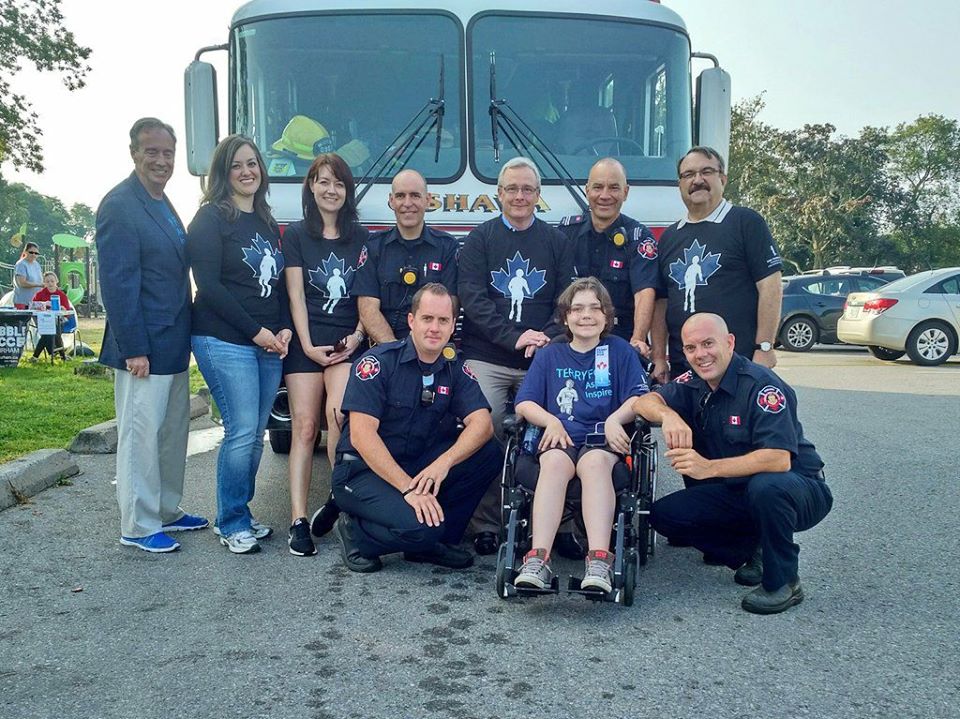
And pretty lucky. My health is stable enough that with my mom's newfound nursing skills, using my GTube for hydration and my wheelchair to cope with the pain and fatigue, I am able to live life on the outside of the hospital. Many kids don't get to see the outside for months at a time. I get to enjoy different events like seeing Bruno Mars, throwing fundraisers, and going out playing Pokemon Go. I have opportunities to just live as close to normally as possible. I get to wake up each day and dream of new ways of making this world a better place. Since the future is unknown, I believe in the hope of a future that brings new and great things. I believe that I can and will make a difference. And all of that makes me pretty happy.
I close with something my mom always tells me: We all have challenges in this life. It is how we rise to meet those challenges that truly tells us who we are at our core.
Wednesday, October 11, 2017
How Video-Games Help With My Chronic Illness
Video-games. Like them or hate them, they are a big part of our world today. Phone Apps, Console Games, and the good old classic, computer games, play a huge role in our culture. They also play a huge role in my life, especially as a chronically ill child.
Due to my illnesses and their many complications, I haven't had the most typical of childhoods. From the time I was 8, I spent the majority of my days either at the hospital, a doctor's waiting room, or at home, hoping the latest treatment would work so that I could get back to my old life again. I had no idea when I was first starting out at the hospital that there wouldn't be any going back to my old life. For example, I had to stop going to Cub Scouts as I couldn't make it to any of the meetings or keep up with them physically in their activities. My social life at school was utterly destroyed because it's hard to build and maintain friendships during your first year at a new school without actually being there to do that. My opportunities for meeting people my own age were quickly circling the drain.
Enter gaming. Playing video-games has given me the chance to increase my opportunities for social interaction when I can't leave the house or leave my hospital room (I tend to spend a lot of time in isolation rooms at the hospital), as well as at the hospital itself. I had started playing MineCraft right before I was diagnosed with Crohn's Disease at the end of grade 3, but was never really big into it or other games until I was hospitalized. I had quickly learned that MineCraft wasn't just a solitary building game, it was a way of interacting with others and having something in common with them. I could walk into Marnie's Lounge (a patient play room at Sick Kids Hospital) and quickly make friends just by talking all things MineCraft related.
And MineCraft wasn't the only game that brought us together. There were many a night when we would have very competitive Mario Kart racing with everyone in the room watching and cheering the players on. Super Smash Brothers became a way of releasing our frustration with our illness and the treatments by pretending that the characters we were battling was some aspect of the illness. Even traditional board games helped to bring us patients together. Video-games help give us a chance to just be a normal kid.
For life outside the hospital, video-games has also been helpful. I've used them to distract me from my pain and other harsh realities of my day-to-day life. For instance, I love Pokemon, so when the game Pokemon Go came out, I was naturally super-excited. But even better than just playing the game on my own to collect all the Pokemon in the wild, the game now features something called Raid battles, where players get together to battle a Pokemon in a huge group in hopes of getting a chance to catch that Pokemon. I've been able to get out to some of these Raid battles over the summer and it's been awesome. I've been able to meet so many other people and form friendships with a lot of them. I've always felt accepted with the other players, in fact, they go out of their way to help me. They offer to push my wheelchair for me, they wait for me to arrive at these Raid battles so that I can be included too. Gaming has brought people into my life who I never would have otherwise met, and had the added benefit of increasing my support network.
For my Jacob's Healing Rooms Project at Sick Kids Hospital, I wanted to include some form of fun and distraction from spending an entire day receiving outpatient IV treatments. Knowing that the right environment can have a huge impact on treatment success, I felt that video-games could play a role in helping to create that environment. I am working on installing tablets at the treatment chairs to give patients access to a form of entertainment, a tool to learn more about their illness, and a way to interact with others. Having something to distract you from the pain, to fill the boredom of waiting for the treatment to be done, can make a huge difference to the day.
Playing video-games has helped me to cope better with my illness. It's something that I can do no matter how bad I feel. It's a valuable tool on the healing journey that I think is often overlooked or given a bad rep. For me, it's been absolutely irreplaceable.
When the going gets rough, you've just got to get your "Game-On"!
Subscribe to:
Posts (Atom)